

Cracks in a driveway are not only unsightly but can also worsen over time if not addressed. While replacing the driveway may seem like the only possibility, concrete leveling is a cost-effective solution that can repair certain types of cracks and restore the driveway’s functionality. Here’s what you need to know to figure out if concrete leveling is right for your cracked driveway.
What Is Concrete Leveling?
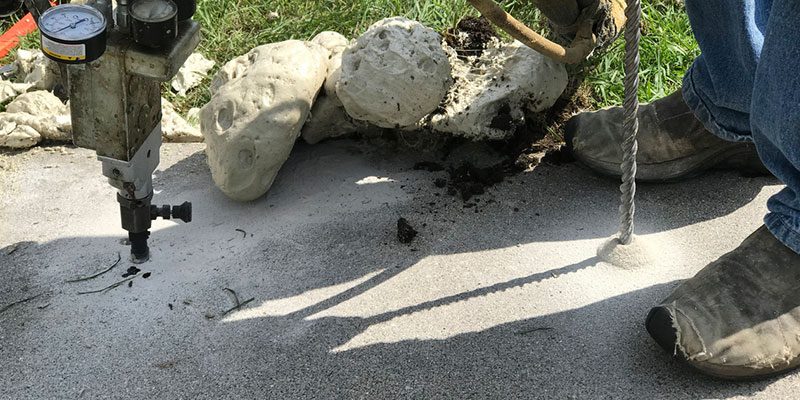
Concrete leveling is also known as mudjacking or slabjacking. This process lifts and stabilizes sunken or uneven concrete slabs by injecting a mixture underneath them to fill voids, raise the surface, and restore the slabs to their original level. It’s a popular alternative to full replacement for issues like sinking or minor cracking.
Can Concrete Leveling Fix Cracks?
Hairline or small cracks caused by settling can often be repaired as part of the leveling process. If cracks are due to uneven slabs, leveling can bring the slabs back into alignment and close the gaps. If the cracks are deep, wide, or caused by structural issues, leveling may not be enough. In such cases, full slab replacement may be necessary. Leveling doesn’t address surface damage like spalling or large areas of crumbling concrete.
Benefits of Concrete Leveling
Leveling is significantly cheaper than replacing the entire driveway. We finish most leveling projects in a day, minimizing disruption. By reusing the existing slab, leveling reduces waste compared to replacement. When done correctly, concrete leveling extends the lifespan of your driveway by several years.
Concrete leveling fixes many types of driveway cracks, especially those caused by uneven settling. While it’s not suitable for all situations, it is an affordable and efficient solution for minor to moderate issues. By addressing cracks early with leveling, you can save money and extend the life of your driveway without the hassle of a full replacement.